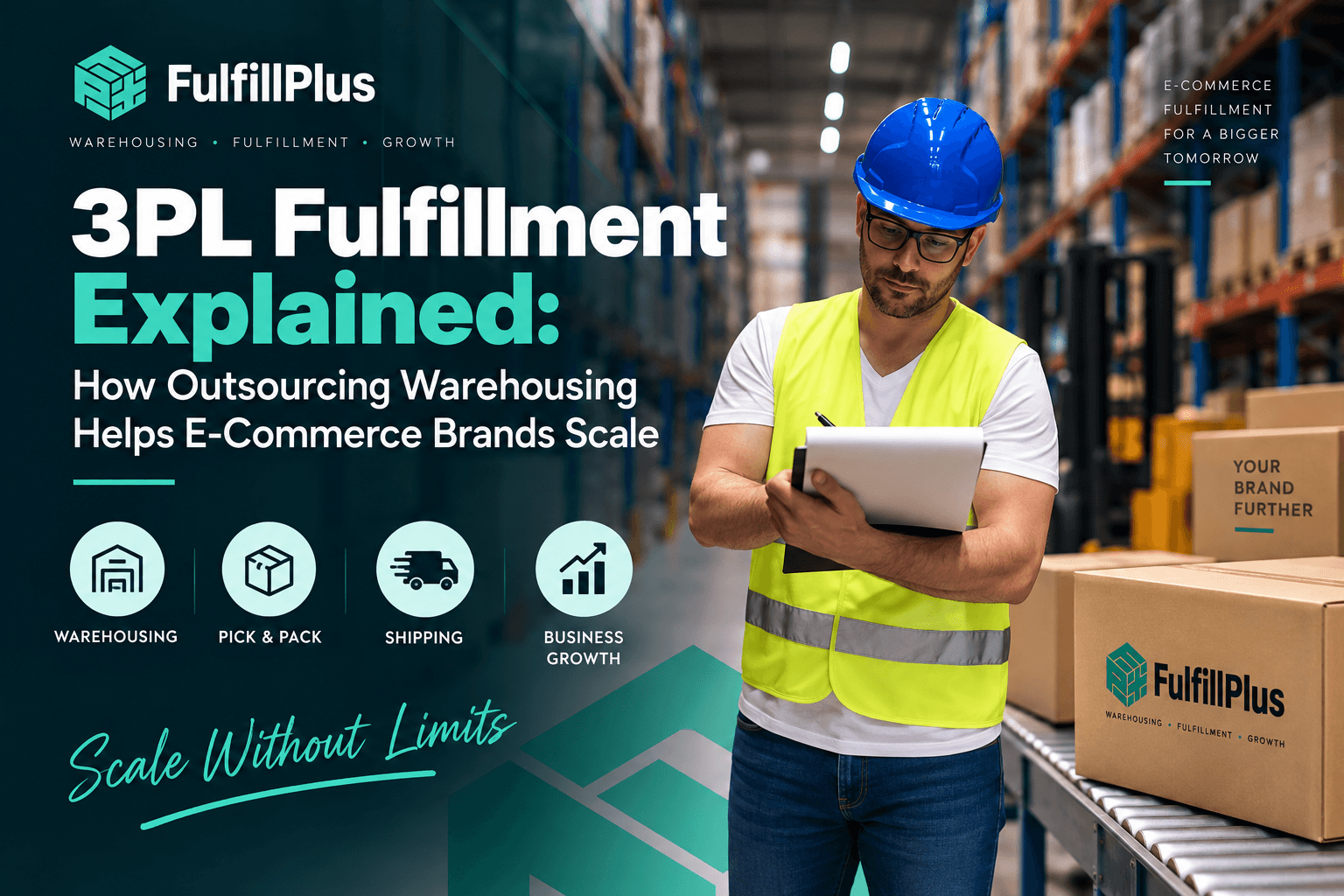
Every growing online firm encounters the same problem at some point: the garage, spare bedroom or solitary storage unit that used to handle orders just well is no longer sufficient. Boxes pile up, shipping Errors occur and the founder who used to pack every order is now buried in tape and packing peanuts instead of operating the business. That’s usually when 3PL fulfillment comes in.
So if you’re wondering what 3PL fulfillment really means, how it compares with handling logistics in-house, and if outsourcing warehousing is ideal for your brand, this guide runs over everything you need to know.
What is 3PL fulfillment
3PL means “third-party logistics.” A 3PL fulfillment provider is a company that warehouses your inventory, selects and packs your orders and ships them on your behalf to your consumers. You outsource those obligations to a partner that already has the space, people, and processes in place instead of bearing the costs of leasing your own warehouse space, recruiting your own warehouse team, and negotiating your own shipping prices.
In reality, e-commerce fulfillment services usually include:
- Receiving and inventory storage your items arrive at the 3PL warehouse and are added to inventory
- Order Processing automatically syncs with the fulfillment Center from your online store
- Pick & pack warehouse staff get the right items and prepare them for delivery
- Shipping & Carrier Management the 3PL chooses carriers, produces labels and gets things moving
- Returns handling inbound returns are received, inspected and either restocked or processed
A 3PL fulfillment partner services several brands at once, so it can spread warehousing expenses, shipping volume, and technology across all of them, which is where the savings and speed advantages for individual companies happen.
Why E-Commerce Brands Choose to Outsource Warehousing
It’s not just about freeing up space, warehouse outsourcing. For most growing brands it comes down to five practical factors.
1. Lower Overhead, No Long Term Lease
You have fixed costs with a rented warehouse and labour, whether you send 50 orders a week or 5,000. By outsourcing warehousing, you convert that into a variable cost connected to real order volume, which is most important for seasonal or fast-growing firms that can’t estimate demand a year out.
2. More Affordable Shipping
3PLs often have several warehouse locations in a country or region. A single Houston warehouse can’t match the delivery speed of a network with coast-to-coast coverage to West Coast clients. By placing inventory closer to customers, you reduce transit times and shipping costs.
3. Better Accuracy, Less Errors
Warehouse management tools, barcode scanning and professional fulfillment teams help reduce picking and shipping blunders that are typical when order volume outpaces a small in-house team’s bandwidth.
4. Time Back for Real Business
Every hour spent packaging boxes is an hour not spent on product development, marketing or client interactions. Outsourcing fulfillment helps founders and teams focus on growth, not logistics.
5. In-Built Scalability
A 3PL fulfillment partner can absorb a Christmas sales spike, a viral product moment, or regular month-over-month growth without a company needing to lease more space or recruit seasonal warehouse labour itself.
3PL fulfillment & In-House fulfillment
| In-House fulfillment | 3PL fulfillment | |
|---|---|---|
| Storage space | You lease and operate it | Provided by 3PL |
| Staffing | You employ, train and manage | Handled by the 3PL |
| Shipping rates | Individually negotiated | Applied across all 3PL clients |
| Scalability | Constrained by your own space/staff | Flexible, based on order quantity |
| Technology | You develop or purchase your own systems | Available with 3PL integration |
| Best fit for | Very early-stage or very specialised operations | Growing e-commerce brands |
There is no one “better” model. A brand that ships a handful of orders a week might not need a 3PL yet. But whenever order volume, SKU count, or delivery zones start to tax a DIY arrangement, outsourcing usually becomes the most viable alternative.
What to Look for in an E-Commerce fulfillment Partner
Not all 3PL fulfillment suppliers are created equal. When weighing options for outsourcing warehousing, brands should examine closely:
- Warehouse locations coverage on both coasts (or wherever your consumers are concentrated) shortens delivery times
- Platform connectors direct links to Shopify, Amazon, Walmart, TikTok Shop, Etsy, and similar platforms remove laborious order entry
- Order accuracy and speed metrics look for actual accuracy rates and same-day/24-hour processing standards, not vague claims
- Fee transparency hidden fees and mandated monthly minimums can eliminate the cost savings outsourcing is supposed to offer
- Specialised service support kitting, subscription boxes, retail compliance and FBA alternative programs are important if your brand needs them
- Visibility and reporting real-time inventory and order tracking should be included, not an upsell
For example, FulfillPlus has fulfillment centers nationwide and can have your product in the hands of your customers in 2 days with ground shipping anywhere in the continental U.S. They have a 99.99% order accuracy rate and process orders within 24 hours of receipt with no hidden fees or monthly minimums, so you only pay for the space and services you actually use.
Is 3PL fulfillment Right For Your Brand?
The most sensible time for a brand to use a 3PL fulfillment is when they see any of the following:
- Order volume has outgrown available storage capacity or staff capacity
- Shipping mistakes or delays are beginning to impact customer reviews
- Expansion into new sales channels (retail, marketplaces, subscription) is creating operational complexity
- Founders or operational teams are spending more time packing boxes than scaling business
- Seasonal demand spikes are difficult to staff internally
If any of it rings a bell, it might be worth looking at warehouse services and fulfillment partners that can scale with the business instead of becoming another bottleneck.
Summary Conclusion
3PL fulfillment is no longer a cost-saving strategy, but an operational pivot that allows e-commerce firms to exchange warehouse logistics for speed, accuracy, and room to grow. Outsourcing warehousing to the appropriate partner translates to speedier shipment for customers, less fulfillment issues for the team, and a supply chain that can flex with demand rather than limit it.
Curious what specialised e-commerce fulfillment services can look like for your brand? Talk to FulfillPlus about your existing setup and how a 3PL fulfillment relationship might help you expand.