
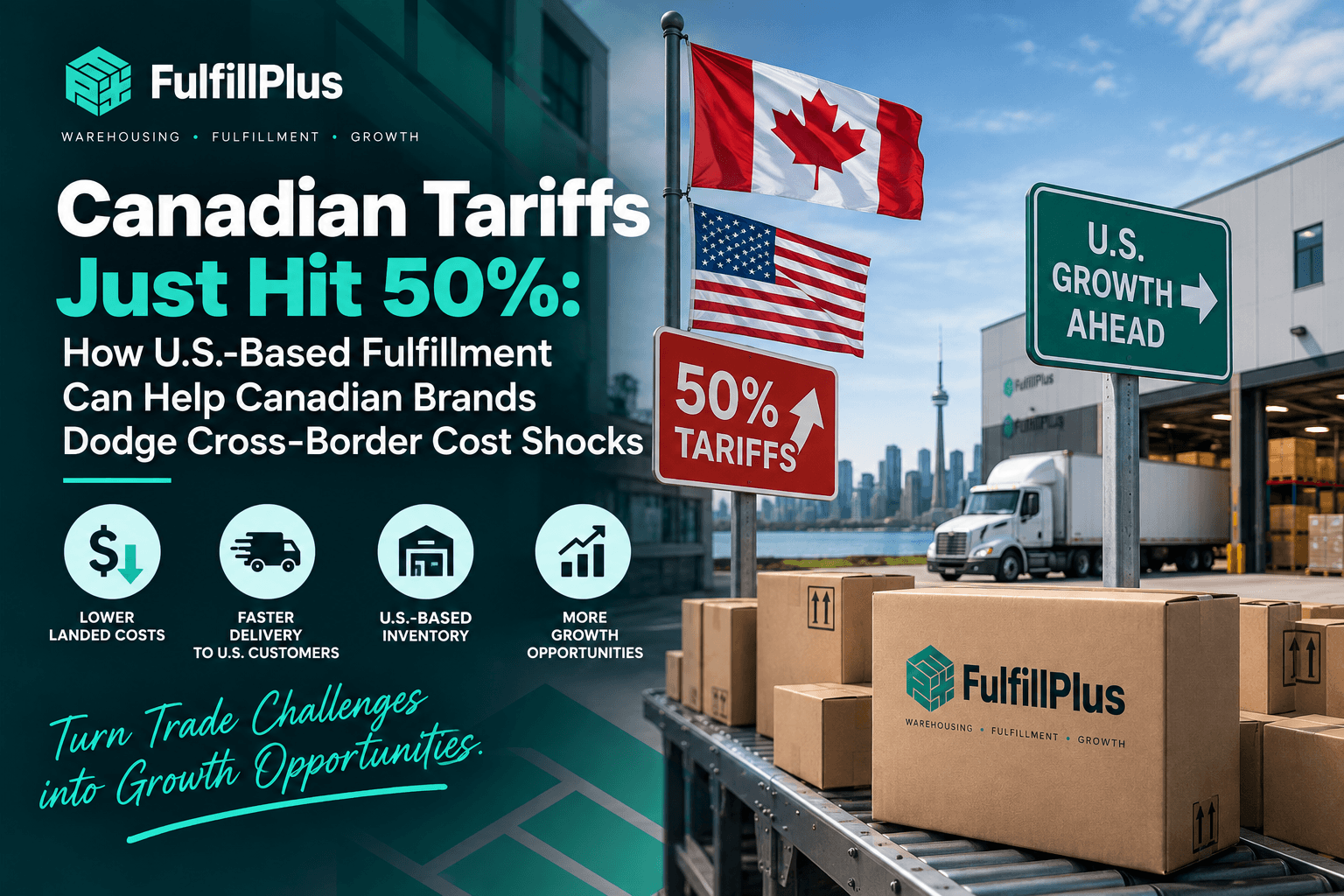
U.S.-Canada tariffs have risen dramatically into 2026, with rates on some product categories now as high as 50% in both directions. For Canadian brands selling to U.S. clients or U.S. brands sourcing from Canada, that kind of swing can turn a steady landed cost into a moving target overnight.
With trade talks still underway and individual rates fluctuating constantly, this isn’t the place to expect any one number to stay stable for long. What’s more helpful right now is understanding the structural fix: using a US 3PL for Canadian brands to warehouse inventory within the United States, so goods clear customs once, in bulk, rather than facing tariffs and delays on every individual cross-border order.
Why Fulfillment Across Borders Got So Expensive
When a Canadian brand sends orders from Canada to U.S. customers, each shipment crosses the border independently. Each parcel is subject to current tariff rates, customs processing fees, and carrier cross-border fees at the time of shipment. If tariffs stay stable, that’s manageable. When they’re changing week to week, as they have in 2026, it becomes exceedingly difficult to price products, quote shipping, or forecast margins with any accuracy.
There’s also a speed issue. Cross-border shipments generally involve customs brokerage and inspection steps that domestic shipments don’t require, which adds days to delivery timelines and creates more chances for a package to get held up entirely.
That’s a minor pain for a brand shipping a couple of orders a week. It’s a serious cost and reliability issue for a brand doing meaningful volume into the U.S.
How U.S.-Based Fulfillment Changes the Numbers
The idea behind cross-border ecommerce fulfillment through a U.S. 3PL is simple: instead of shipping individual orders across the border as they come in, bring inventory into the U.S. in bulk, ahead of time.
This shift matters for a few reasons:
- One customs event, not thousands. A single bulk shipment to a U.S. warehouse clears customs once. From there, every order to a U.S. customer ships as a domestic parcel, with no border crossing, brokerage fee, or customs wait per order.
- Domestic shipping speed. Once inventory is sitting in a U.S. fulfillment center, delivery to U.S. customers works exactly the same as it would for any American brand: standard ground shipping timelines, not international transit periods.
- More predictable landed costs. Bulk import volumes are easier to plan and budget for than per-parcel duty exposure, particularly when rates are changing regularly. You’re managing cost at the container level, not the package level.
- Fewer failed or returned cross-border deliveries. Customs holds, surprise duty bills, and paperwork issues are common reasons cross-border shipments get rejected or returned. Removing the per-order border crossing eliminates most of that risk.
None of this abolishes tariffs. Inventory still carries import duties. But it changes when and how often that exposure happens, which is a major difference when rates are unpredictable.
What It Looks Like in Practice
Here’s how a typical transition for a Canadian brand looks:
- Consolidate inventory shipments into larger, less frequent shipments crossing into the U.S., instead of sending each customer order individually from Canada.
- Store that inventory at a U.S. fulfillment center located near where your U.S. customer base actually is.
- Let the fulfillment partner handle domestic pick, pack, and ship for every U.S. order, the same way it would for a U.S.-based company.
- Keep Canadian fulfillment separate for domestic Canadian orders, if that volume still makes sense to ship from within Canada.
This is also where platform integrations matter. A fulfillment partner integrated with Shopify, Amazon, Walmart, TikTok Shop, and Etsy can route U.S. orders to U.S. inventory and Canadian orders to Canadian inventory automatically, without manual sorting on your end.
Questions to Ask Before Moving Inventory
Moving inventory to a US 3PL for Canadian brands isn’t a decision to make lightly, or without a few conversations first:
- What’s your current U.S. order volume, and is it consistent enough to justify holding inventory in the U.S. ahead of demand?
- Does your fulfillment partner have real integrations with the platforms you sell on, or will orders need manual handling?
- What are the actual import duties for your product category? Tariff schedules are changing regularly enough in 2026 that it’s worth verifying directly with a customs broker or the relevant government trade resource, rather than relying on a number from a few months ago.
- Are there fees for cross-border inventory transfers, storage, or account minimums that could offset the savings from avoiding per-order duties?
A fulfillment partner with coast-to-coast U.S. warehouse coverage, transparent pricing, and no required monthly minimums makes this kind of transition lower-risk to test, since you’re not locked into a long-term commitment before you know whether the volume justifies it.
Closing Thoughts
The exact tariff rates between the U.S. and Canada will likely keep fluctuating for the rest of 2026. What won’t change is the structural advantage of moving product across the border in bulk, once, rather than exposing every individual customer order to whatever the rate happens to be that week. For Canadian brands with meaningful U.S. sales volume, shifting from cross-border parcel shipping to U.S.-based fulfillment is one of the more direct ways to stabilize costs while the trade situation stays in flux.
Note: This is not customs or legal advice. Tariff classifications vary by product, so it’s worth confirming current rates for your specific goods with a licensed customs broker. If you’d like to discuss what U.S.-based fulfillment could look like for your company, contact FulfillPlus to talk through warehouse locations, integrations, and pricing.