
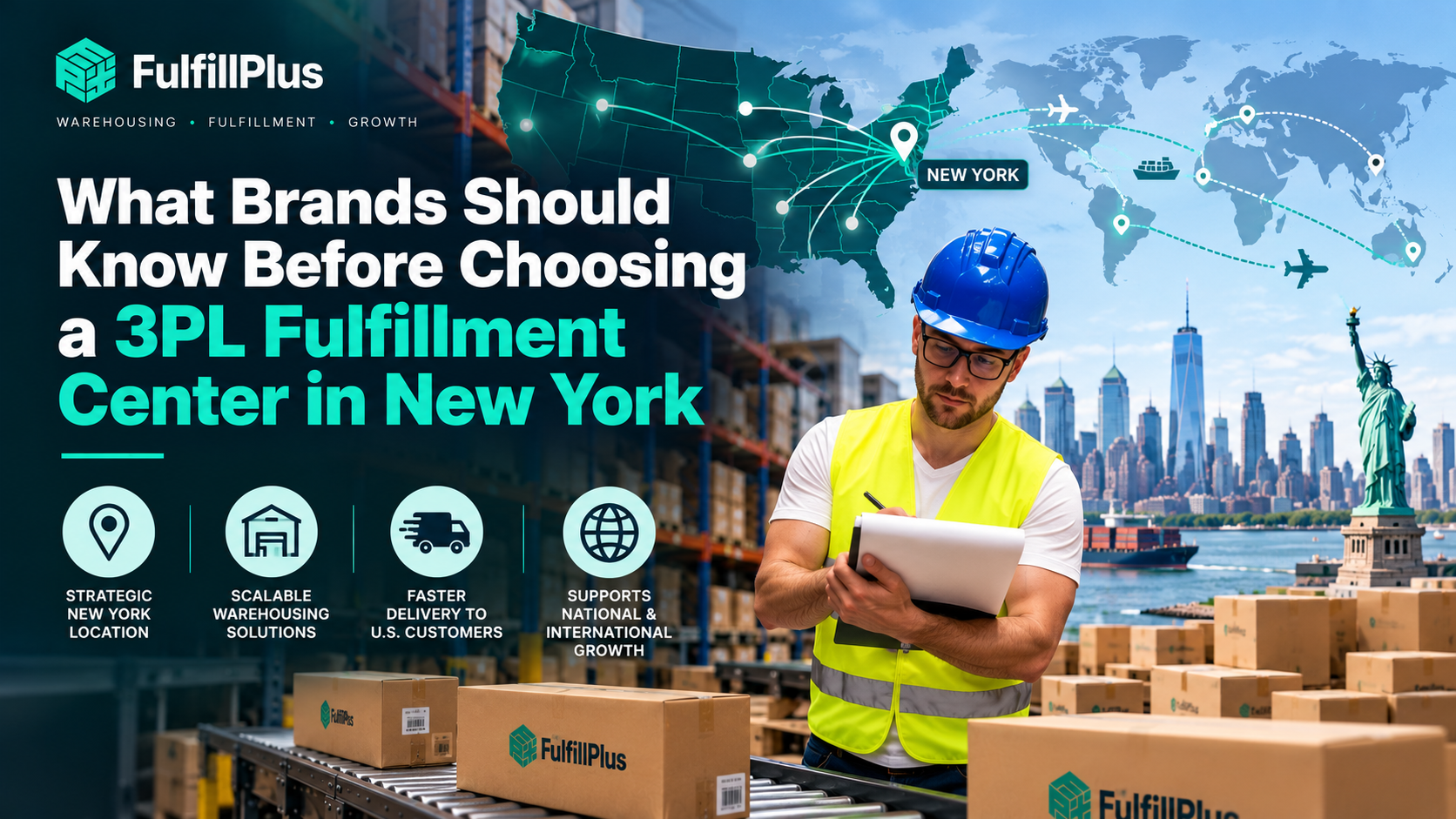
New York is one of the most valuable markets an e-commerce brand can serve, and one of the most expensive places to actually operate a warehouse. That combination is exactly why so many brands end up confused when they start researching a fulfillment center in New York: the market demand is real, but the warehousing economics don’t always point to a facility sitting inside the five boroughs or even inside the state line.
Before committing inventory to a New York-based option, it’s worth understanding what you’re actually optimizing for, because the right answer often looks different than the search term suggests.
What “Fulfillment Center in New York” Usually Means in Practice
When brands search for NYC warehousing, they’re typically trying to solve one of two problems: faster delivery to New York customers, or lower shipping costs into the New York metro area. Neither of those problems actually requires a warehouse located inside New York City or even New York State.
Real estate and labor costs inside the five boroughs make large-scale fulfillment operations expensive to run there, which is why most serious fulfillment capacity serving the New York market sits in nearby states with highway access to the city: New Jersey, Pennsylvania, and Connecticut all host major fulfillment infrastructure built specifically to serve NY ecommerce fulfillment demand without absorbing New York City’s warehouse costs.
That distinction matters. A facility an hour or two outside the city can deliver the same 1–2 day ground shipping to New York customers as a facility inside it, at a lower operating cost, which usually means better fulfillment pricing for the brand using it.
What Actually Matters When Evaluating NYC Warehousing Options
Instead of filtering by exact location first, it helps to evaluate a potential fulfillment partner against the things that actually affect your customer experience and cost structure.
1. Delivery Speed to the New York Metro Area
Ask for real ground shipping transit times from the facility to New York City zip codes specifically, not a general regional claim. A facility reaching 1–2 day ground delivery to Manhattan, Brooklyn, Queens, and the surrounding metro area solves the actual problem, regardless of which state the warehouse sits in.
2. Shipping Zone Costs
Carrier pricing is based on distance-based shipping zones. A facility positioned closer to New York reduces the number of zones a package crosses, which lowers the per-order shipping cost. This is often the more significant cost driver than the facility’s address itself.
3. Platform Integrations
Direct connections to Shopify, Amazon, Walmart, TikTok Shop, and Etsy remove manual order entry and reduce fulfillment errors. For brands selling across multiple channels into the New York market, this matters more than warehouse location on its own.
4. Order Accuracy and Processing Speed
Ask for actual accuracy rates and processing benchmarks, not vague promises. A facility that processes orders within 24 hours with a high accuracy rate delivers a more consistent customer experience than one that only hits those numbers outside of peak demand periods.
5. Fee Transparency
Hidden per-order fees and required monthly minimums can erase whatever cost advantage a well-located facility offers in the first place. Transparent, predictable pricing matters more as order volume grows.
6. Specialized Handling Capabilities
Kitting, subscription box fulfillment, retail replenishment, and DTC order fulfillment aren’t offered identically everywhere. If your brand needs one of these, confirm it’s a core capability of the facility you’re evaluating, not an add-on.
Why Proximity Beats a New York Address
For a brand focused on serving New York customers well, proximity to the metro area matters more than a literal New York mailing address. A facility in northern New Jersey, eastern Pennsylvania, or southern Connecticut can offer the same delivery speed to New York City as a facility located inside the state, often at a better price point because it isn’t absorbing New York’s real estate and labor costs.
This is the same logic that’s led most national retailers and major fulfillment operators to build warehouse capacity in the broader New York-New Jersey-Pennsylvania corridor rather than directly inside New York City. The population density of the Northeast means a well-positioned facility anywhere in that corridor can reach New York, New Jersey, Philadelphia, and the wider Tri-State region within a similar delivery window.
FulfillPlus operates an East Coast fulfillment center in Pennsylvania built to serve exactly this corridor, with 1–2 day ground shipping reach into New York City, New Jersey, Maryland, and the broader Tri-State area. It’s not a facility located inside New York State, and that’s by design: the location was chosen for delivery speed and cost efficiency to the New York market, not for a specific address.
Benefits of Choosing a Nearby Location Over an In-State Address
| Benefit | Why It Matters |
| Lower warehouse operating costs | Facilities outside the city avoid NYC-level real estate and labor costs, which supports better fulfillment pricing |
| Comparable delivery speed | A well-positioned facility 1–2 hours outside the city reaches New York customers in the 1 day window |
| Access to major highway corridors | Direct interstate access into NYC, NJ, and the broader Northeast keeps transit times short and predictable |
| Room to scale | Facilities outside the densest metro areas typically have more warehouse space available for growing inventory needs |
| Regional diversification | A facility just outside New York can often also reach Philadelphia, New Jersey, and parts of New England without added transit time |
Reach Via Ground Service
| Destination | Approx. Ground Transit |
| New York City, NY | 1 day |
| Northern New Jersey | 1 day |
| Philadelphia, PA | 1 day |
| Washington, D.C. / Baltimore, MD | 1 day |
| Boston, MA | 1–2 days |
| Upstate New York | 1–2 days |
Transit times are general estimates for standard ground shipping and vary by carrier, exact origin, and destination address.
Benefits of International Shipping Support
Brands evaluating a fulfillment center for the New York market often serve customers well beyond it, including international buyers reached through marketplaces, wholesale accounts, or direct international orders. A fulfillment partner with international shipping capability, in addition to strong domestic coverage, offers a few concrete advantages:
| Benefit | What It Means for Your Brand |
| Access to international carrier networks | Avoids relying on a single carrier’s international rates and service levels |
| Customs and documentation support | Reduces delays and rejected shipments caused by paperwork errors |
| Consolidated international order handling | One partner manages both domestic NY-area orders and international orders, reducing operational complexity |
| Reach into 200+ countries | Expands addressable market beyond the U.S. without building separate international logistics |
| Single point of inventory management | Avoids splitting stock across multiple providers to cover domestic and international demand separately |
For brands expanding beyond the New York metro area, a fulfillment partner that already supports international shipping removes the need to find and onboard a separate provider later.
Is This the Right Fit for an Ecommerce Brand, or Something Else?
Not every brand researching a fulfillment center in New York has the same needs. The right evaluation depends on what kind of business is doing the shipping.
If you’re an ecommerce or DTC brand: Delivery speed to New York customers and platform integrations with Shopify, Amazon, Walmart, TikTok Shop, or Etsy matter most. Look for a partner that connects directly to your sales channels and can scale with order volume during peak periods like the holidays.
If you’re a subscription box business: Consistent processing timing matters more than raw speed. Look for a partner experienced in recurring, date-sensitive shipments and kitting, since subscription fulfillment has different operational demands than one-off ecommerce orders.
If you’re a wholesale or B2B brand: Retail compliance, larger shipment handling, and white-glove delivery options matter more than fast parcel shipping to individual consumers. Confirm the facility supports retail replenishment and B2B order formats, not just direct-to-consumer parcels.
If you’re an apparel or merchandise brand: Kitting, custom packaging, and return handling are often more important than raw speed, since apparel tends to carry higher return rates than other categories. Confirm the facility has experience with size-based inventory and reverse logistics.
Whatever category your brand falls into, the core question stays the same: does this facility reduce cost and delivery time for the specific kind of orders you actually ship, not just orders in general.
Questions to Ask Before You Commit
Before choosing a fulfillment center to serve your New York customers, it’s worth getting clear answers to:
- What are the actual ground shipping transit times from this facility to New York City zip codes?
- How does the facility’s shipping zone pricing compare to a true in-state New York option?
- Does the provider support the sales platforms you actually use?
- What’s the real order accuracy rate, including during peak season?
- Are there hidden fees, storage minimums, or account minimums that affect total cost?
- Can the facility support the specific order types your brand ships, such as subscription boxes, kitting, or retail replenishment?
A provider that answers these clearly, with real numbers instead of general claims, is a stronger signal than the state listed on the warehouse address.
Final Thoughts
A fulfillment center in New York sounds like the obvious solution for brands targeting New York customers, but the better question is which facility actually delivers the fastest, most cost-effective service to that market, regardless of its exact address. For most brands, that answer points to a well-positioned East Coast facility rather than a warehouse inside New York City itself.
Want to see what East Coast fulfillment could look like for your brand’s New York order volume? Contact FulfillPlus to talk through delivery times, pricing, and platform integrations for your business.